
You know the word. You can almost see it in your head. But for some reason, it just won’t come out.
Or you sit down to read an email and realize you’ve gone through the same paragraph three times without taking anything in. By the afternoon, you’re struggling to concentrate, losing your train of thought, or feeling like your brain is running a little slower than usual.
That frustrating, fuzzy feeling is often called brain fog.
And if you’ve started noticing it more often, you may have wondered:
Could food be making it worse?
It’s a reasonable question. Your brain needs a steady supply of energy, fluids, and nutrients to function normally—and your everyday diet affects all of them. But that doesn’t mean there’s a single “brain food” that will make the fog disappear.
The more useful question is:
What should you be eating more often if you want to support your brain and keep your diet working in your favor?
That’s what we’re going to look at here.
We’ll start with the foods that deserve more room on your plate, then look at foods worth cutting back on. And there’s a bigger piece of the puzzle that ties many of these choices together: the MIND diet, an eating pattern developed around foods associated with brain health.
You don’t need a perfect diet. You don’t need expensive superfoods. And you don’t need to completely change the way you eat overnight.
You just need to know which choices are worth making more often—and why.
What Are the Good Foods for Brain Fog?
If you’re wondering what foods to eat for brain fog, start by thinking less about individual “brain-boosting” foods and more about your overall eating pattern.
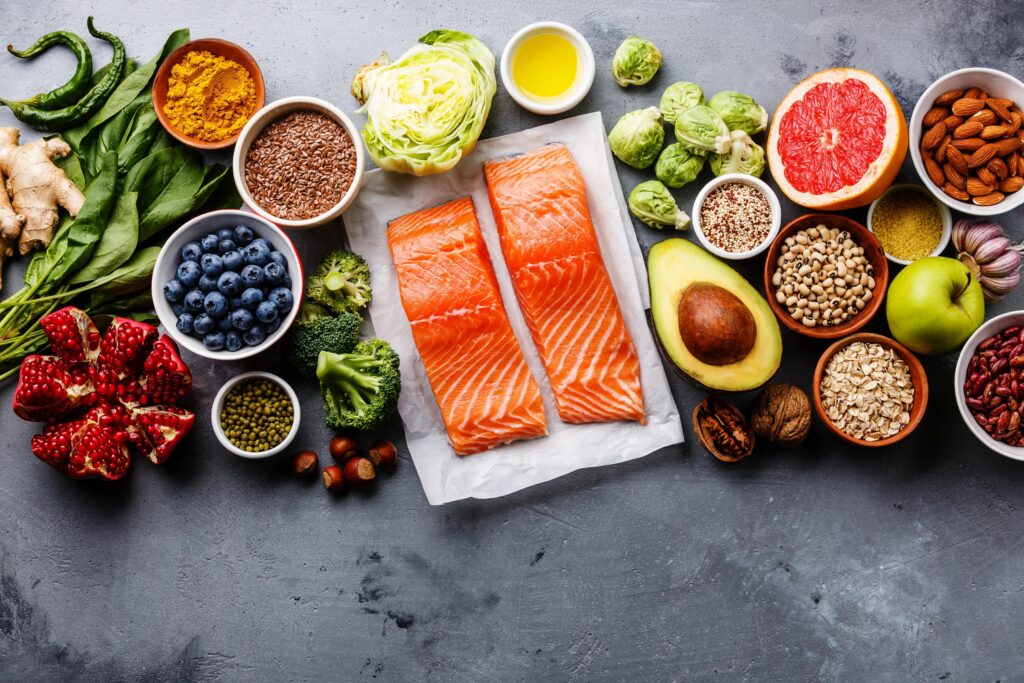
The foods below are part of a dietary approach that emphasizes vegetables, berries, whole grains, beans, nuts, fish, and olive oil.
These foods don’t treat brain fog. But they can help you build a healthier overall diet—one that supports your brain as well as the rest of your body.
1. Leafy Green Vegetables
Think spinach, kale, collard greens, and other dark green leafy vegetables.
Leafy greens provide folate, vitamin K, vitamin C, vitamin A, magnesium, potassium, and fiber. They also contain plant compounds such as lutein and beta-carotene.
They’re not just popular because they’re “healthy.” Leafy greens are one of the foods the MIND diet specifically emphasizes, so they have a clear place in the eating pattern we’re discussing.
And you don’t need to build your lunch around a giant salad.
Add spinach to eggs, toss some greens into a sandwich, or serve a simple side salad with dinner.
Easy habit: Add a serving of leafy greens to one meal a day.
2. Berries
Blueberries, strawberries, raspberries, and other berries are another food group emphasized by the MIND diet.
Berries provide vitamin C, fiber, folate, and potassium, along with naturally occurring plant compounds called polyphenols, including anthocyanins in many dark-colored berries.
They’re an easy way to add more fruit to your diet without making meals complicated.
Try them with foods you may already eat:
- Add berries to oatmeal.
- Mix them into plain yogurt.
- Keep a bowl of berries available for a snack.
- Use frozen berries in a smoothie.
They can also make an easy swap when you’re reaching for a sweeter, more processed snack.
Easy habit: Add a handful of berries to breakfast a few days a week.
3. Nuts
Nuts can be one of the easiest foods to keep around when hunger hits between meals.
Almonds, walnuts, pistachios, and other nuts provide healthy unsaturated fats, protein, fiber, magnesium, vitamin E, and other minerals. Different nuts also provide different nutrients—for example, walnuts contain omega-3 fatty acid ALA, while almonds are particularly rich in vitamin E. They’re also part of the MIND diet.
The trick is making them convenient.
If cookies, chips, or other packaged snacks are the easiest thing to grab, that’s probably what you’ll reach for. Keep a container of unsalted nuts where you can see it instead.
Easy habit: Keep a small portion of unsalted nuts ready for between-meal snacking.
4. Fish
Fish is another food the MIND diet emphasizes, with fatty fish such as salmon, sardines, trout, and mackerel providing omega-3 fatty acids.
Fatty fish provides EPA and DHA omega-3 fatty acids, high-quality protein, vitamin D, vitamin B12, selenium, and other nutrients. Some fish, including salmon and sardines, are also good sources of vitamin B6 and niacin.
You don’t need to turn every dinner into a fish dinner.
If you enjoy fish, simply making it a regular part of your meals can move your diet toward the pattern we’re aiming for.
Try baked salmon with vegetables, sardines on whole-grain toast, or grilled fish with a simple salad.
Easy habit: If you rarely eat fish, start by adding one fish meal to your weekly routine.
5. Whole Grains
Oatmeal, brown rice, barley, and whole-grain bread are simple ways to bring more whole grains into your diet.
Whole grains provide complex carbohydrates, fiber, B vitamins, magnesium, iron, zinc, and other minerals. They also contain naturally occurring plant compounds and more nutrients than their refined counterparts.
You don’t have to completely eliminate white bread or white rice.
A more realistic approach is to make one swap at a time.
Have oatmeal instead of a sugary breakfast cereal. Try brown rice with one meal. Choose whole-grain bread for your next sandwich.
Small changes are easier to maintain than a complete diet makeover.
Easy habit: Replace one refined grain with a whole-grain option each day.
6. Beans
Beans, lentils, and chickpeas are easy to overlook, but they fit remarkably well into a brain-friendly eating pattern.
Beans and legumes provide plant-based protein, fiber, folate, iron, magnesium, potassium, and other B vitamins and minerals. They also contain a variety of naturally occurring plant compounds.
They’re inexpensive, filling, and provide fiber and plant-based protein. And you don’t need a special recipe to use them.
Add chickpeas to a salad. Stir beans into soup. Mix lentils into a curry. Add black beans to rice or a wrap.
This is one of those foods where simple beats fancy.
Easy habit: Add beans, lentils, or chickpeas to one meal a few times a week.
7. Olive Oil
Olive oil is a staple of Mediterranean-style eating and is also emphasized by the MIND diet.
Extra-virgin olive oil provides monounsaturated fat, vitamin E, and vitamin K, along with naturally occurring polyphenols and other plant compounds. Its exact nutrient profile can vary depending on the type and processing.
It’s an easy way to change the way you prepare food without changing the food itself.
Use it in a salad dressing, drizzle it over cooked vegetables, or use it when sautéing vegetables.
You don’t need to pour it over everything. The point is simply to make it a regular part of your cooking.
Easy habit: Use olive oil in place of some other cooking fats when it makes sense.
What Foods Should You Limit?
Eating more of the foods above is only part of the picture.
The MIND diet also puts less emphasis on foods that are typically high in saturated fat, added sugar, or heavily processed ingredients.
That includes:
- Red meat
- Butter and margarine
- Cheese
- Fried foods
- Fast food
- Pastries and sweets
This doesn’t mean you have to ban these foods.
A more useful approach is to look at how often they show up in your usual diet.
If a fast-food meal is an occasional convenience, that’s different from relying on it several times a week. The same goes for sweets, processed snacks, and large amounts of butter or cheese.
Think less often, not never again.
What Is the MIND Diet?
The MIND diet stands for Mediterranean-DASH Intervention for Neurodegenerative Delay.
It’s an eating pattern that combines elements of the Mediterranean diet and the DASH diet, with a particular focus on foods associated with brain health.
The basic idea is straightforward:
Eat more of certain plant-based and nutrient-rich foods, while cutting back on some foods that are less helpful when eaten frequently.
The MIND diet emphasizes:
- Green leafy vegetables
- Other vegetables
- Berries
- Whole grains
- Beans
- Nuts
- Fish
- Olive oil
It limits foods such as red meat, sweets, cheese, butter and margarine, and fried or fast foods.
You don’t need to follow a complicated menu to understand the basic principle.
In fact, the useful part of the MIND diet may simply be the pattern it encourages.

What Foods Are in the MIND Diet?
If you’re wondering what food is in the MIND diet, the easiest way to remember it is to focus on the major food groups rather than memorizing a long list.
| Eat More Often | Eat Less Often |
|---|---|
| Leafy greens: spinach, kale, collard greens and similar vegetables | Red meat: beef, pork and similar meats |
| Other vegetables: especially a variety of colorful vegetables | Butter and margarine: particularly when used heavily |
| Berries: blueberries, strawberries and other berries | Cheese: especially large or frequent portions |
| Whole grains: oatmeal, brown rice, whole-grain bread and similar foods | Fried and fast foods: keep these as occasional choices rather than everyday staples |
| Beans: beans, lentils and chickpeas | Sweets and pastries: enjoy them occasionally rather than making them a regular part of your diet |
| Nuts: almonds, walnuts, pistachios and other nuts | |
| Fish: particularly fatty fish such as salmon, sardines, trout and mackerel | |
| Olive oil: used regularly as a primary cooking or dressing oil |
The important thing is not to turn this into another rigid diet.
Use it as a simple guide for changing the balance of your meals.
Can the MIND Diet Help With Brain Fog?
This is where it’s important to separate two different questions.
Can a healthy eating pattern support brain health? There is evidence suggesting that healthier dietary patterns are associated with better cognitive outcomes.
Can the MIND diet specifically get rid of your brain fog? That’s a much stronger claim, and the evidence doesn’t support making it.
Research on the MIND diet has produced promising but mixed results. Some observational studies have found associations between greater adherence to the diet and better cognitive outcomes, but observational research can’t prove that the diet itself caused those results.
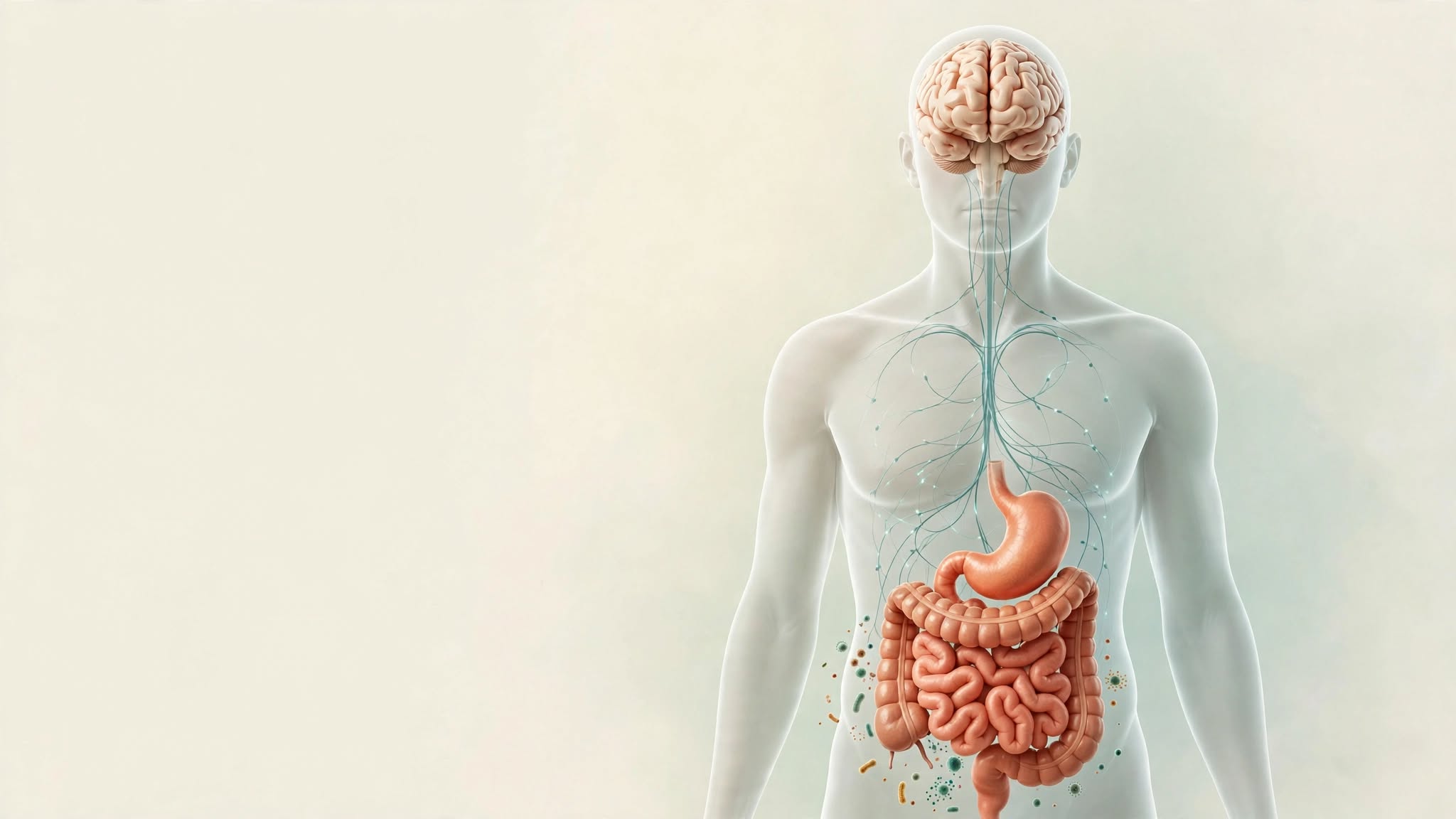
Researchers are also exploring the gut-brain axis, the communication network connecting the gut and the brain, to better understand how gut health may relate to cognitive function.
Clinical research has also been less definitive.
So it’s reasonable to use the MIND diet as a practical framework for eating more brain-supportive foods. It’s not reasonable to treat it as a proven treatment for brain fog.
That’s an important distinction.
If your brain fog keeps happening, gets worse, or starts interfering with everyday life, food may not be the whole explanation. Sleep problems, stress, medications, and various health conditions can also contribute to problems with concentration or thinking.
If your concern is less about occasional brain fog and more about increasing forgetfulness, you may also want to read about [forgetting things after 50].
What Would a Brain-Friendly Day of Eating Look Like?
You don’t need a special “brain food” menu.
A normal day could look something like this:
Breakfast
Oatmeal topped with berries and a small handful of nuts.
Lunch
A whole-grain sandwich with leafy greens, plus a side of vegetables or fruit.
Snack
A small portion of unsalted nuts or some berries with plain yogurt.
Dinner
Grilled salmon with vegetables and brown rice, with olive oil used in cooking or dressing.
Another option
You could swap the fish for a bean or lentil-based meal. The point isn’t to copy this exact menu. It’s to notice the pattern:
whole grains + vegetables + berries + nuts + beans + fish + olive oil
That’s much more useful than searching for one magical food.
Don’t Forget the Basics
Before blaming your diet for brain fog, look at the basics too.
Are you getting enough sleep?
Poor sleep can leave you tired, unfocused, and mentally slower the next day.
Are you drinking enough fluids?
Dehydration can affect how you feel and function, so staying adequately hydrated matters.
Are you eating regularly?
If you’re routinely skipping meals and then running on snacks or highly processed foods, your overall eating pattern may be worth looking at.
Are you under a lot of stress?
Stress can affect concentration and make ordinary mental tasks feel harder.
Food is one piece of the puzzle—not necessarily the whole puzzle.
The Bottom Line
There isn’t one food that makes brain fog disappear.
If you’re looking for foods for brain fog, a better place to start is with your overall eating pattern.
Give more room to leafy greens, berries, nuts, fish, whole grains, beans, and olive oil. Cut back on heavily processed foods, sweets, fried foods, and other foods that tend to crowd healthier choices out.
The MIND diet gives you a useful framework for doing exactly that.
You don’t have to follow it perfectly.
Start with one change you can actually keep.
Add berries to breakfast. Replace one refined grain with a whole grain. Put a few servings of beans into your weekly meals. Or simply make leafy greens a regular part of lunch or dinner.
Small, repeatable changes are more useful than a perfect diet you abandon after two weeks.
And if your brain fog keeps showing up despite improving your habits, don’t assume food is the answer. That’s a good reason to look at the bigger picture.
Resources
- National Institute on Aging — Diet and cognitive health
- National Institute on Aging — Healthful diet and cognitive decline
- Cleveland Clinic — Brain Fog
- National Library of Medicine — Research on the MIND diet and cognitive outcomes